

7 Social Media Problems Almost Every Small Business Owner Has (And What Actually Fixes Them)
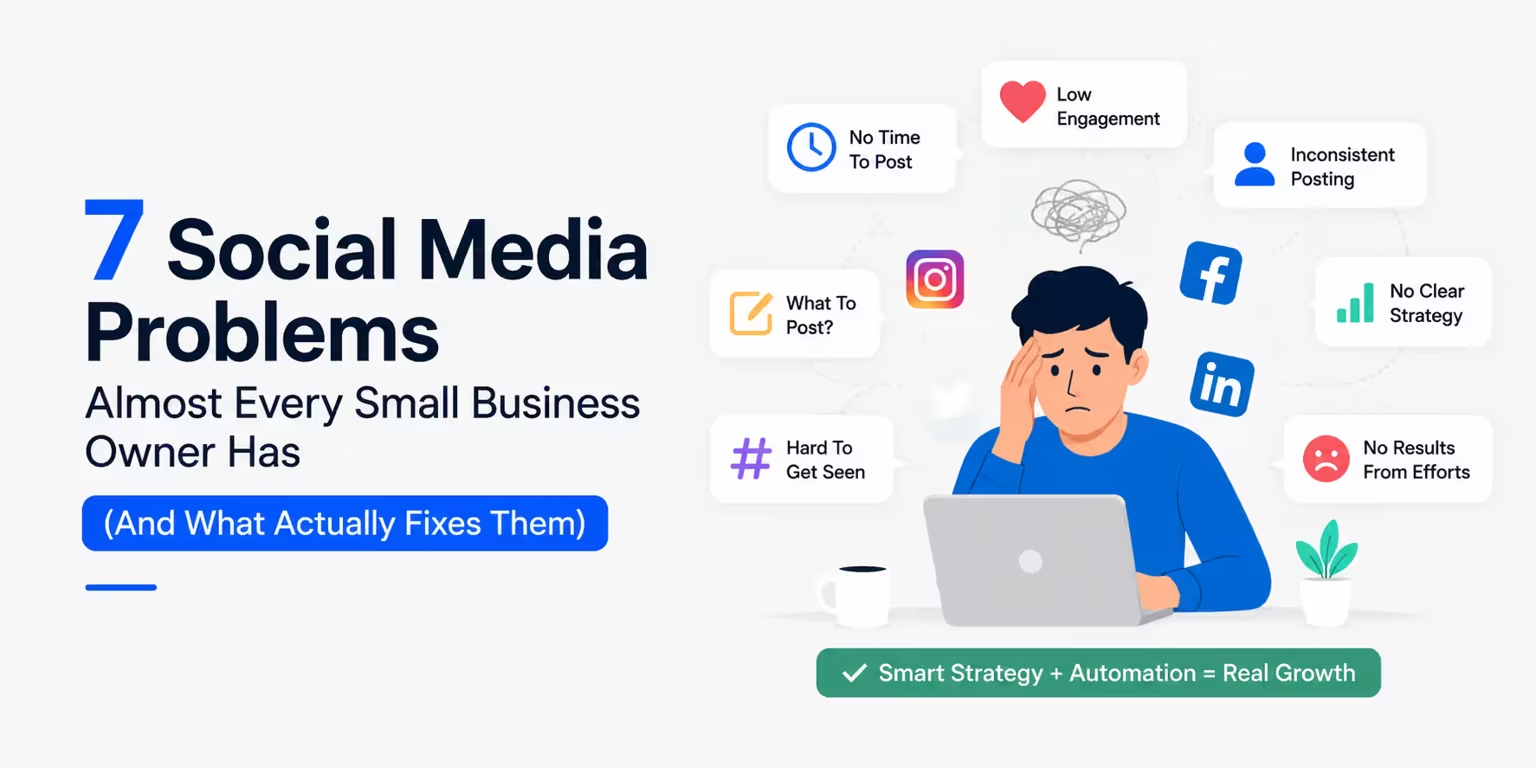
Posting randomly, no time, low engagement, no idea what's working. If any of this sounds familiar, you're not doing it wrong, you're just dealing with the same problems every small business owner deals with.
If you run a small business and your social media feels like a mess you're constantly trying to keep up with, here's something that might help: you're not bad at this. You're just dealing with the same handful of problems that basically every small business owner runs into.
The good news is that once you can actually name the problem, it gets a lot easier to fix. So let's go through the most common ones, in plain language, with what actually helps.
1. You post when you remember, not on a schedule
This is probably the most common one. You're busy running the actual business, and social media is the thing that happens "when you get a chance." Some weeks that's three posts. Other weeks it's none.
The problem isn't that you're lazy. It's that posting isn't built into your routine, it's an extra task competing with everything else you have to do, and it usually loses.
What helps: A content calendar that's planned out in advance, ideally for the whole month, so posting becomes something that happens on its own instead of something you have to remember. Once it's planned ahead of time, you're not making decisions every single day, you're just reviewing and approving.2. You don't know what to post about
You sit down to post something, and your mind goes blank. You don't want to just sell, sell, sell, but you're also not sure what else to talk about. So you end up either posting nothing, or posting something generic that doesn't really say anything.
This happens to literally everyone, even people who are good writers in other parts of their life. Coming up with content ideas day after day is a specific skill, and most business owners never had to build it.
What helps: Having a small set of content "buckets" you rotate through, things like answering common customer questions, sharing behind-the-scenes moments, talking about a problem your product or service solves, or highlighting a customer story. When you're not starting from a blank page every time, it gets a lot easier.3. Your posts get almost no engagement
You post something, you check back later, and it's got two likes and no comments. This one stings a bit, because it feels personal, like nobody cares.
Most of the time, it's not personal at all. It usually comes down to one of a few things: the content doesn't give people an obvious reason to react (no question, no opinion, nothing to respond to), the timing isn't lining up with when your audience is actually online, or there just isn't enough consistency yet for the algorithm to start showing your posts to more people.
What helps: Two small changes make a bigger difference than people expect. First, end posts with something that invites a response, a question, an opinion, something people can react to. Second, look at your last 10 to 15 posts and see which ones did slightly better than the rest. There's almost always a pattern, a topic, a format, a time of day, even if it's a small one. Lean into that pattern instead of guessing.4. You're on multiple platforms but only really show up on one
Maybe you've got accounts on Instagram, Facebook, LinkedIn, and Threads, but if you're honest, only one of them gets any real attention. The others are basically ghost towns with your logo on them.
This happens because each platform technically needs different content, different formats, different tone, and keeping up with even one platform is hard enough. Multiplying that by three or four feels impossible, so most people just... don't.
What helps: You don't need completely different content for every platform, you need the same core message adapted slightly for each one. A single idea can become a LinkedIn post, an Instagram caption, and a Facebook update with small adjustments to tone and length. The heavy lifting is coming up with the idea once, not rewriting everything from scratch four times.5. You don't reply to comments and messages as much as you should
Someone comments on your post, or sends a DM asking about your hours or pricing, and you mean to reply. Then the day gets busy, and by the time you remember, it's been two days and it feels too late to respond.
This one is sneaky because it doesn't feel like a big deal in the moment, but it adds up. People notice when a business doesn't respond, and for some of them, that's the difference between becoming a customer and just scrolling past.
What helps: Treat replies like a quick daily habit rather than something you'll "get to." Even five to ten minutes a day, checking comments and messages across your accounts, prevents things from piling up. The goal isn't to reply instantly to everything, it's to not let things sit for days.6. You have no idea if any of this is actually working
You're posting, sort of, but you couldn't say whether it's bringing in any customers, building your brand, or doing anything at all. There's no real way to tell if the time you're spending is worth it.
This is probably the most demoralizing one, because without knowing if something is working, it's hard to stay motivated to keep doing it. It starts to feel like shouting into a void.
What helps: Pick one or two numbers that actually matter to your business, not just likes and followers, but things like profile visits, link clicks, or messages from new people, and check them monthly. You don't need a complicated dashboard. You just need to know if the trend is going up, flat, or down, and adjust from there.7. The whole thing just takes more time than you have
This is the one that ties all the others together. Even if you knew exactly what to post, when to post it, and how to reply to everyone, you'd still need actual hours in the day to do it. And for most small business owners, those hours just don't exist, not because of laziness, but because there's an actual business to run.
This is the problem that quietly causes all the others. Inconsistent posting, generic content, no replies, no idea what's working, almost all of it traces back to not having enough time to do this properly alongside everything else.
What helps: At some point, the most realistic fix isn't trying harder or being more disciplined, it's removing the operational work from your plate entirely. This is the gap Flowzens was built to close. It looks at your business, builds out a content strategy, creates the posts, captions, images, and calendar, and schedules everything across your platforms. You get a quick approval step a couple of times a week, and that's it. The other six problems on this list mostly take care of themselves once this one is solved.The honest takeaway
If you recognized your business in most of these, that's genuinely normal. These aren't signs that you're doing something wrong, they're just what happens when social media competes for time against running an actual business, and the business wins almost every time.
The businesses that look like they've "figured out" social media usually haven't found more hours in the day than you have. They've just found a way to take the day-to-day work off their own plate, so what's left is the small, occasional part that actually needs them.
See it for your own business
If you want to see what your social media looks like when the operational side runs itself, start a free 14-day trial on Flowzens. No credit card required. Connect your accounts, set up your brand profile, and see your first content calendar built for you in minutes.
Managing social media for multiple clients? The Elite Agency plan lets you run this across every brand from one place.
About the Author: Hitesh Yadav. is the Founder of Flowzens, an AI-powered social media automation platform built for brands, agencies, and creators across India. Founded in 2025 and headquartered in India.Ready to Autopilot Your Growth?
Let Flowzens manage your social media pipeline. Scrape your site, map strategy, generate visual calendars, and publish natively on autopilot.